

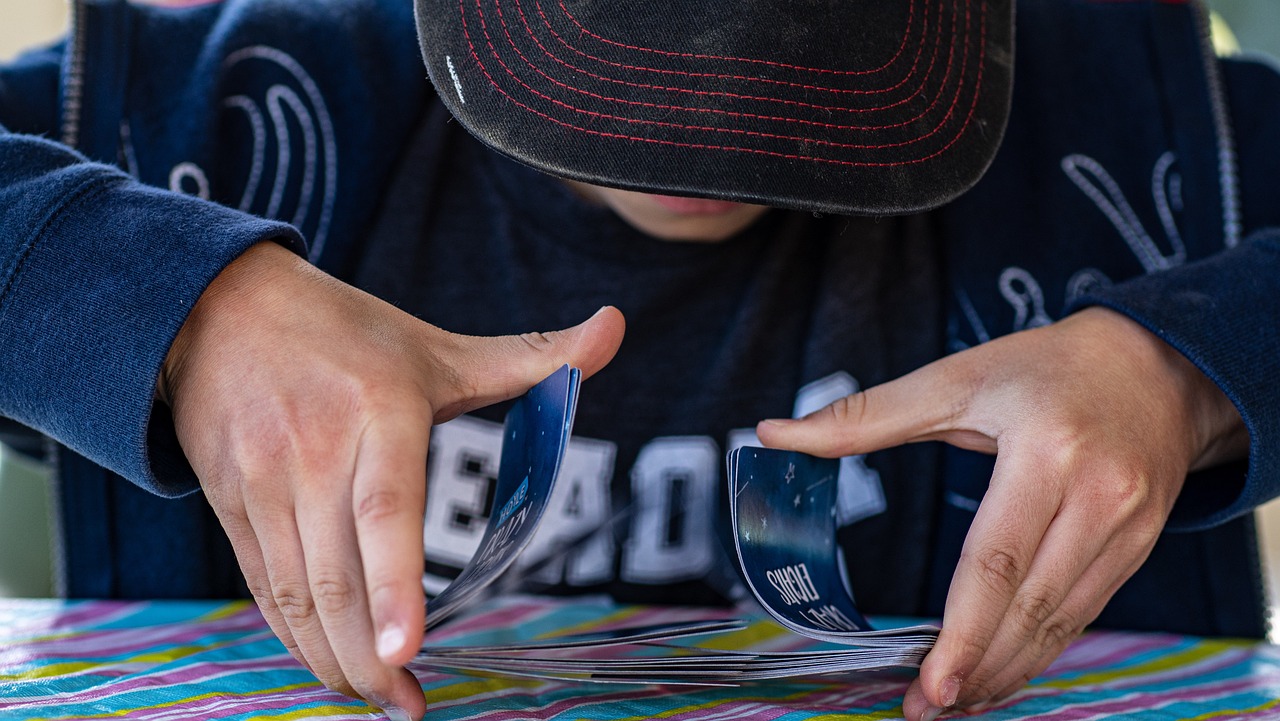
Where to begin, that’s the question. There are so many great options out there, but I’m going to narrow it down to a few card games to get started. I’m always on the lookout for games that fit my criteria. First of all I love these games because they don’t take up much space. They usually come in a tin or box. They are compact and travel easily. I keep games in my Grandma bag along with crafts and books. I love having a ready supply of non-screentime activities.
Before, I jump in and share my list, there is something very, very, very important to remember about games. Some families will not even attempt games for this reason. It’s attitude. Some children simply cannot handle losing. Some cannot focus. Some have their feelings easily hurt. Some despise competition. I know this is a challenge to manage all these different attitudes, but it is exactly why I believe games are the answer, not the catalyst for the chaos.
If your family thrives on competition and loves games of all kinds, that is a great start; however, you want to use this opportunity to help your children be kind in the process. No one has to be apologetic for winning, but it is also time to learn to be grateful, not arrogant, over the win. Winning does not give anyone the right to insult or belittle the losers, especially in a family. I’m not talking about friendly banter. I’m talking about shaming or bullying someone because they did not win. Harsh behavior from parents, siblings, or friends can lead to someone quitting and storming off even in the middle of the game. This often happens to younger players who not quite as skilled as older kids. The good news is there is a remedy.
If you have kiddos who are reluctant to play games, start with shorter games or don’t play the entire game at first. If they lack confidence, work on that character development outside the game. If they do not know how to play, then play with them one-on-one to help them learn the game before playing with a bigger crowd. Here are some quick tips to keep game night fun. You are going to find a strong food theme going on, but kids love it because it is very familiar.
- Before you give the gift or play the game with your children, learn the rules yourself. There are actually a lot of how-to-play videos online that you can watch yourself or with your children as you are learning the game.
- Play a practice round or two or three, until everyone seems to know what to do.
- Play teams with younger ones or those who are learning the game have support while they learn.
- Spend time learning the basics. Our five-year-old granddaughter wanted to play a game I thought would be too hard for her. Instead of playing by the full rules, we introduced her to all the cards by naming them and sorting them. Then we moved to a matching game. Once she knew all the card names, we played out some strategies for the games. Certain cards were collected with specific point values. We played the game, but only to build the stacks correctly. It only took about 30 minute of prep, and she was ready to play. We were all amazed that she actually understood the strategy and legitimately won her first round.
- For younger children or in the beginning for tweens, hold back a little on your skill level. Yes, let them win while they are learning. It’s best to do this one-on-one instead of in a group. I’m a stickler for honesty, but I see this as a compromise during the learning phase. As the child increases in skill, I will offer more competition by degrees until they are up to speed.
- Spot It What’s not to love about Spot It. It is a fabulous choice as a first card game for young children. It can be challenging even for adults, but older kiddos might be willing to entertain a sibling for a while, but would be slow to choose for themselves. It might seem juvenile. It is an upleveled matching game. Each player has their own card and must match at least one symbol to the card in the middle. It requires concentration and helps develop visual perception and eye-hand coordination. It’s easily stored in a round tin, has very short rounds, and also has additional ways to play. It comes in several additions like Bluie, Spiderman, Camping, etc.
- Taco Goat Cheese Pizza. This is a fast-paced game that uses a lot of skills. I love it because it’s portable, easy to store, and has fast rounds. It is fun for kids, adults, and a great family game for those who want more physical action. That is the plus and the minus. It requires concentration and quick physical reaction to respond to patterns. For kids who love competition, this is a great choice. People who are easily overstimulated, struggle with sensory integration, and are easily overwhelmed might not enjoy it at all in a group. They might like it at a slower one-on-one pace. It comes in several editions for added fun.
- Taco v Burrito (actually created by a child). I love it because it is simple, easy to learn, and has short rounds. It also has built-in card holders with the taco and burrito holders. There are different levels of play. It can be enjoyed by children and adults alike.
- Pizza Party: Fun, simple game for the younger crowd or the young at heart. It is super simple. With a roll of the dice, you build a pizza. Stores in a pizza-shaped box.
- Suishi Go We love this game for kids or adults. The youngest children could play on teams with very little contribution, but for 8 and up, it’s great. Some 5-7-year-olds might be able to play with support and after some training. It is stored in a handy tin, and it played in 3 quick rounds. There are other editions for a variety of expeerience on the same theme. It spans the ages. Adults can turn play into a tournament. This is one of the those games where we spent time naming and matchng the cards, building point stacks, and lots of practice rounds before settling into an acutal scored game.
- Uno This almost needs no introduction. It is the OG of family card games that span the ages. I like this set because it stores in a tin. The boxes wear out long before the cards. We may or may not have several sets now stored in zip-lock bags. Uno is great because it is built on a platform of recognizing color and numbers. It requires concentration, following directions, quick thinking, and allows for growth in strategy. For young or new players, take time to practice the matching rules: number-to-number and color-to-color. Then add in the command cards. For non-readers, they can play times or sit next to a “reader” who will help them recognize the cards with writing, such as reverse or draw 2, etc. After a few rounds, they will pick up on the symbols and short words themselves. In many ways, I think Uno deserves a lot of credit for being the glue that holds our family together. lol They have similar versions such as Phase 10 and Skip-Bo
- Take 5 It says ages 8-adult, but the rules are a bit more complicated than the other games highlighted on this blog list. I think kids 12 and older could jump right in. Advanced 8-11-year-olds would likely do well. Younger children could learn the game by playing teams with another adult in teaching mode and discussing strategy, or they might need a lot of time to play out possible scenarios. Honestly, even as adults, it took my husband and me a couple of practice rounds to get the rules of the game down. Once you learn it, you are good to go. This is a strategy game of playing number cards that control how many cards you have at the end of the game. Lowest points win. Love the quick rounds, and the sturdy box that this set comes in.
- SET This is a fun game for ages 6+. Some younger children might catch on. This game is heavier on logic and spatial reasoning, and on skill-building that uses both left- and right-brain processing: visual perception, pattern recognition, and more. This is an award-winning game that builds sets of all alike or all different by color, shape, number, or shading.
- Card holders for little hands ( senior citizen hands). As my own hands become more arthritic, I love these holders. Don’t underestimate what a difference these holders can make. Sometimesthe chief discomfort for children is holding and managing the cards. These items can literally be “game-changers.” Sorry, I couldn’t help myself. 😉
- wooden Set of 4 durable wooden card holders. Holds a lot of cards
- paddle-shaped Helpful for the smallest hands. Holds a several cards.
- spring-loaded clips Inexpensive, must hold it in your hands.
- long plastic holder sits on the table, great for kids and senior citizens
Oh wow! I could keep going because we love so many games, but I promised you a short, get-started list. I have already listed more than I had planned. If you don’t know where to start, choose a game or two that fit the age and/or skill level of the group who will be playing, and start there. If you are super excited, then buy them all and start your collection. You will always have something to choose from, no matter who shows up to play.
WINS: community, relationships, attentiveness, critical thinking, pattern recognition, sequential planning, communication, family togetherness, conflict resolution, visual perception, spatial reasoning, eye-hand coordination, and even more. Lots of wins with games!
Photo credit: Hucklebarry / Pixabay (Image #5444926)
*As an Amazon Associate I earn from qualifying purchases.
A portion of our proceeds go to support schools in under-served areas around the world.
💚 I wholeheartedly encourage to shop local or small business first. Support your friends and family first. If what you are looking for is not available, then check out these links. Keep in mind a lot of small businesses use larger sales platforms to expand their markets and stay in business.